Mammal of the Month: Otter (Lutra lutra)


otter2

Make your way down to a quiet area of your closest river during dawn and if you sit quiet and have enough luck on your side, you may catch a glimpse of an otter. The otter population has been on the rise since major conservation efforts such as reintroduction and beneficial riverside management practices have been put in place. The species was given protection within the Wildlife and Countryside Act (1981) as the population decreased drastically during the use of organo-chlorine pesticides. Since the government banned the use of organo-chlorine pesticides in the 1970’s, the otter population which had previously been sparsely distributed has become more widespread and there are now sightings in every county, with some sightings recorded in urban areas –  an unusual choice of habitat for such a shy creature.

otter

The otter is a member of the Mustelidae family, members of which are referred to as mustelids. Other British mustelids include badgers, stoats, polecats and pine martens to name a few. The otter is narrow bodied, on average 60-80 cm in length, and is brown furred, although usually paler on it’s underside. Other distinctive features are it’s long tail (usually around 35 cm long) and it’s webbed feet making it a good swimmer in it’s semi-aquatic environment. Otters are not social creatures, and will only interact with other otters when they want to mate. They hunt for fish, amphibians and crustaceans in solidarity within their 20 kilometre stretch of territory. They mark their territory with their faeces, which is also referred to as spraint. Otter spraint can be identified by it’s powerful musky smell (sometimes likened to jasmine tea!) and often contains the bones of fish and amphibians. Otters tend to place their spraints in prominent areas so next time you’re walking by the river keep an eye (and your nose!) out for them. Spraints are usually black and slimy in appearance and range from 3 – 10 cms in length.

spraint

Otters will only inhabit areas of clean water where there is an abundance of prey items, and hence the increase in otter population throughout the UK is a sign that Britain’s waterways are the cleanest they have been since the Industrial revolution. If an otter finds a suitable habitat and marks it territory, it will create several areas along its territory called holts. Holts are usually above ground on the riverbank, and can be identified due to the presence of spraint, flat patches of earth where otters lay during the day and you may also see a “slide” down into the river made out of the river bank, so otters can make a quick escape if they are threatened. Holts are usually built within dense vegetation or other areas with sufficient cover.

As otters are quite hard to spot, mammalogists tend to estimate otter populations within surveys based on spraint density within a given area and sometimes from the presence of tracks. Otter tracks are similar in size and shape to dog and fox footprints, but otters leave five toe-prints and sometimes the webs between their toes may be spotted in the footprint.

Screenshot 2014-07-12 at 16.39.39

Despite their big comeback, otters are still considered to be “Near Threatened” on the IUCN Red List and so conservation efforts must remain in practice before we can be sure the otter is well established within the British Isles again. Due to it’s protection, it is important that if you feel inspired to go out and search for otters you remain quiet and respectful to prevent disturbance.

That’s it for this month, suggestions on which mammal to cover next month are welcome.

Danni

Images in this post have be reused under the Creative Commons Licence

Image Credits: Otters by Peter Trimmings; Spraint by Sarah D; Tracks by Helge Schulz

Our Troubled Wildlife: Part 2

After reading the first part of this article, I am hoping I have inspired you to make Britain a more wildlife friendly place – because our wildlife definitely needs the help. I have gathered a list of things that you can do yourself or with your family to help our furry, feathered and chitin-covered friends!

Creating a wildlife garden

Many people take pride in their gardens – keeping them neat and tidy on a regular basis. These pristine gardens can be very aesthetically pleasing but it’s no use to garden wildlife! To turn your garden into a wildlife haven, you can dedicate a corner of your garden to grow naturally – long grass, piles of leaf litter and dead wood such as log piles are great fun for wildlife especially hedgehogs and bugs. Dedicating a flowerbed to grow wildflowers can help attract butterflies and bees, and once more insects are attracted to your garden you may notice an increase and variation in the birds and mammals visiting your garden. Attracted wildlife will be more likely to call your garden home if you provide shelter, food and water – nest boxes, hedgehog homes and bug hotels are a great addition to your wildlife corners, as are regularly cleaned, shallow bowls of water and bird feeders.

Tracking the wildlife you see

Many scientists in the field rely heavily on public sightings of wildlife in their research! There are a few ways that you can help with increasing the national wildlife sighting database; organisations such as the British Trust for Ornithology (BTO) and The Mammal Society have created apps (Bird Track/Mammal Tracker) for mobiles so you can track what you see on the go. Wildlife Trusts also hold events for the public which may also include surveying practises such as small mammal trapping so you can witness science in the field.

Wildlife organisation memberships and donations

Many organisations that are involved with the protection and conservation of our wildlife and our habitats are charities, and money collected from memberships, donations and adoption schemes really does help our wildlife as conservation efforts which have been funded by these sources is already shown to be improving our wildlife populations. The following organisations are some of many which could always use a few of your pennies if you’re feeling generous: your local Wildlife Trust, RSPB, BTO, Peoples Trust for Endangered Species and many more.

Protect wildlife from our pets

Pets are wonderful additions to our families, as a huge dog lover I couldn’t imagine a life without pets. But, they can be trouble for our wildlife but only if we don’t do our best to prevent wildlife fatalities. One of the biggest culprits in causing wildlife fatalities are cats as many tend to predate on birds and small mammals when they are out of the house. If you are a cat owner you can help by attaching a bell to your cats collar or consider making your cat an indoor cat.

Support your local wildlife rehabilitation centre

Wildllife rehabilitation centres are places where you can take sick and injured wildlife you may find, and the workers there will nurse the animals back to health to be released into the wild. These centres are often charities which can only continue to run through donations from the public and businesses. Find out where your local wildlife rehabilitation centre is and consider donating to them as they always need the help. Donations can come in the form of money or items such as old towels and bedding, and also cotton wool balls, mealworms, and dog food.

Clean up our countryside

Litter is everywhere, not just in urban areas but in the countryside, and especially in the countryside surrounding urban areas. Not only is it unsightly to see fast food wrappers and bottles while you’re out on a walk, but it’s really not good for wildlife. Many animals can become trapped inside of litter causing death, the RSPCA have put together a good guide on how to prevent these incidences, plus you can help by being responsible with your rubbish and picking up after the people who have kindly decided it isn’t their responsibility…

Volunteer for Wildlife Charities

If you have a big interest in wildlife and perhaps even have skills such as gardening, land management, knowledge on how to use tools such as loppers and saws or even teaching, then voluntary work may be something that suits you. Most charities don’t expect you to be able to volunteer for them on a regular basis and will still be willing to let you become part of their volunteer team, even if you can only offer a few hours of your time a month. It’s a really rewarding way to spend your time as you will develop new skills, learn new things, and meet like-minded people. If you are considering a career involving aspects of the natural world then becoming a volunteer is highly recommended, as it looks really good on your CV too. Not to mention, the majority of the conservation work and events held by charities to raise awareness of the challenges our wildlife face wouldn’t be possible without the help of volunteers.


Hopefully everyone who comes away from reading this post will do at least one thing to help our wildlife, or perhaps if you do not live in the UK some of these tips will still be of use to help protect your own wildlife too. If more people become aware of these problems and are motivated to make a difference, perhaps in 10 years time we’ll be able to say that our wildlife populations have increased, and we have saved many species from becoming extinct.


Danni


Our Troubled Wildlife: Part 1

When the phrase “endangered species” comes to mind, it is likely that most people will think about elephants, tigers and orangutans, not water voles, hedgehogs and great crested newts. When the term “habitat decline” is mentioned, the idea of deforestation in the Sumatran rainforest or the melting ice caps are more commonly thought of than Britain’s moss habitats and our ancient woodlands. Britain’s wildlife is in big trouble, and it has experienced a population decline of 60% over the past few decades – yet no one seems to be aware of this.

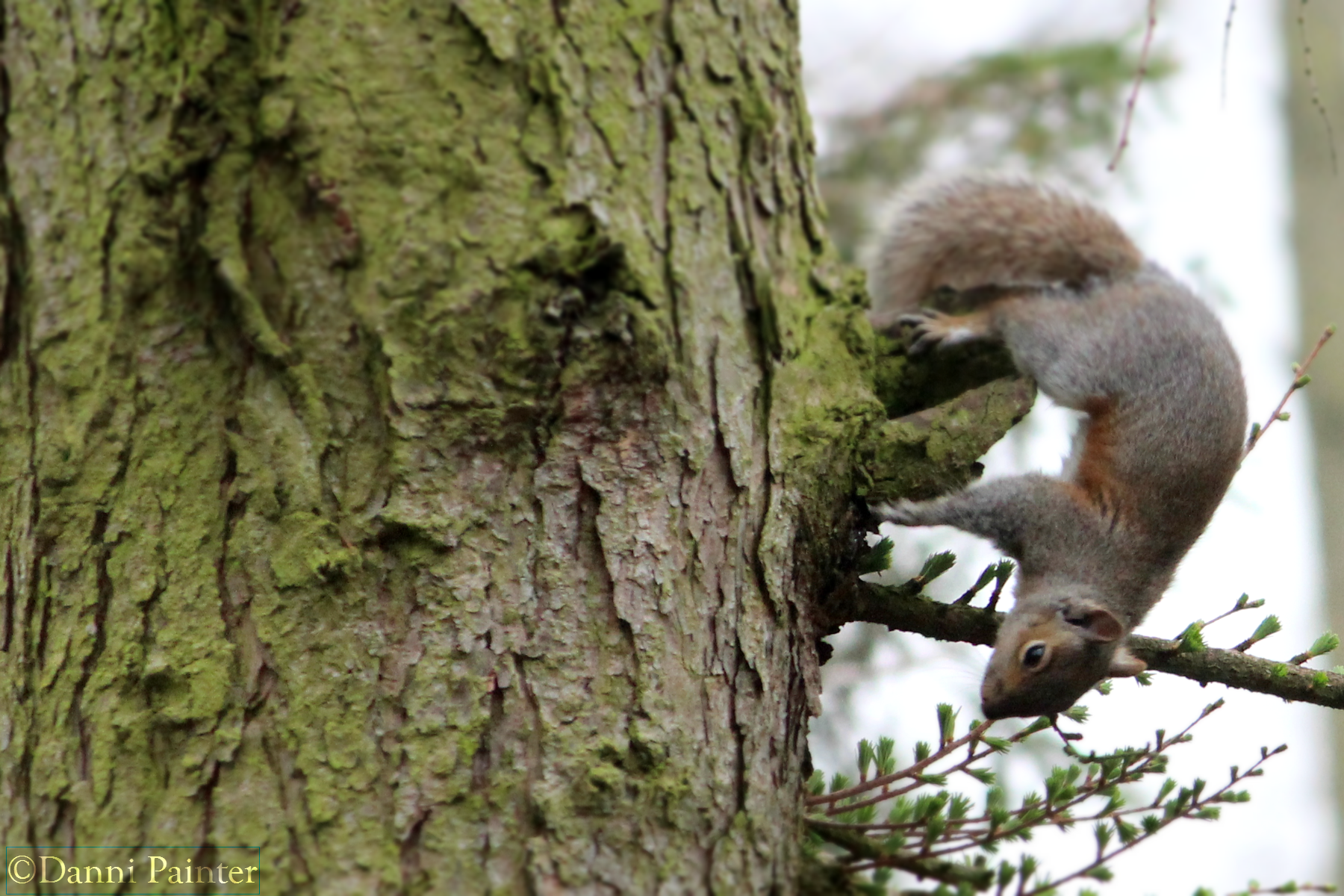
The grey squirrel has massively reduced the red squirrel population since its introduction in the late 19th century

The grey squirrel has massively reduced the red squirrel population since its introduction in the late 19th century

Some of these species, such as the Red Squirrel, is in decline due to the introduction of an alien species – the Grey Squirrel. Other species, such as the Scottish Wildcat, are threatened by the domestic cats as the species interbreed creating hybrids which is reducing the number of pure-bred wildcats. However, the majority of our species are threatened by habitat destruction and also climate change.

A hazel dormouse in torpor

The Hazel Dormouse is an adorable small mammal that lives in the canopy of our deciduous woodlands,  well known for it’s sleepy autumnal state called torpor, where the animal enters a deep sleep temporarily and rolls up, allowing it to reserve energy and stay warm during the cooler months. The Hazel Dormouse has experienced a population decline, and is disappearing from the northern areas of the England, and it is thought that the main causes of their decline are habitat destruction and fragmentation – usually due to woodland areas being cut down to make space for arable land. Climate change is also thought to be threatening the species, as warmer autumns cause them to awake from hibernation more often and also changes how early they enter hibernation. Wetter summers also make it harder for dormice to forage.

75% of our wildflower meadows have disappeared since World War 2

It is not just our animals that our endangered, but the habitats they they live in. Such endangered environments include wildflower meadows, ponds, ancient woodland, mosses and lowland peat bogs. Since the 1950’s, 97% of our wildflower meadows have been destroyed, causing two thirds of our butterfly species to become threatened or endangered. Half of our ancient woodland has been chopped down, putting strain on many of our beloved woodland species. The most devastating loss however, may be the 98.6% loss of lowland peat bog habitats within England, due to extraction of peat for use as fuel or to be used in compost, leaving England with only 500 hectares of this very special habitat left, allowing species such as the UK’s largest arachnid – the Great Raft Spider, to become endangered and sparsely distributed within the UK.

The Great Raft Spider – The UK’s largest spider with an average legspan of 3 inches.

It is sad to look out towards the British countryside and realise how fragile and vulnerable our wildlife is,  and with climate change becoming more pronounced within the UK, and an ever increasing demand for more housing and urban areas flooding out over our countryside, there is only more threats for our wildlife to encounter. Many conservation projects are underway to protect and restore our wildlife back to its glory, and there are many ways that you can help our wildlife make a comeback.

If you want to help our wildlife, then please watch this space as in Part 2 I will discuss ways in which you can get involved in the oncoming wildlife revival!


Danni

Life Without Fossil Fuels – Part 2

Following on from my previous post, there is a question that I can’t get out of my head. How have we let fossil fuel use and emissions spiral, and rise exponentially for more than a century?

The image provided, shows the ‘Global Carbon Dioxide Emissions from Fossil Fuel Burning between 1751-2012. (Link: http://www.earth-policy.org/indicators/C52/carbon_emissions_2013)

Our use of energy has shaped human history, from the Sun that provided the conditions for life on Earth. Competition for food energy determined the winners and losers of evolution. Fire enabled early humans to cook, improving their diets and enabling their energy-hungry brains to grow even bigger. Leading to agriculture – a systematic means of harnessing the Sun’s energy – freeing us from the constraints of nomadic existence and gave rise to permanent settlements. As human populations flourished, so did knowledge. More people with more ideas unlocked yet more sources of energy. Forests – essentially banks of stored solar energy – were cleared first to produce firewood and building materials, then to make charcoal, which was burned hot enough to smelt the bronze for the bronze age and the iron for the iron age.

More Energy – More Technology – More People – More Energy

This age old feedback loop was the motor that enabled human kind to dominate the Earth.

For most of human history, the Earth coped reasonably well with the onslaught its brainiest and most energy-hungry inhabitant was wreaking. That changed in the eighteenth-century when people accessed significant quantities of fossil fuels. Small-scale fossil use began much earlier. Coal was burned in Ancient Greece, Roman Britain, Aztec Mexico and imperial China.

The reason fossil fuels remained so obscure for so long was that most of them were trapped underground. Finding them was difficult and getting them out was even harder. Steam engine solved that problem, using the incredible power of coal to drain water from deep mines, the energy-society feedback loop went into overdrive. It increased supply of energy comodity and material and boosted progress on every front of technology, from medicine to microscopy.

Importantly, coal didn’t replace existing energy sources; it augmented them. The use of coal kept growing as its liquid cousin – crude oil – rose to significance in the early twentieth-century, which started the increasing rise of carbon emissions. Global use of oil and coal kept rising as the third major fossil fuel – natural gas – started to scale up after the Second World War. As human numbers rose towards three billion in the 1950s this begun the monumental growth in carbon emissions.

More Energy – More Technology – More People – More Energy.

Carbon emissions have been climbing for centuries, but that doesn’t tell the whole story. They have been climbing EXPONENTIALLY.

At any point the steepness is proportional to the height. Not only that but the rate of increase is proportional to the steepness. In other words, the more of something you have, the faster that something grows. Exponential curves can’t go on forever, they get steeper and steeper until eventually something has to give. Or sometimes they tame themselves more gently – such as the way global population has slowed to a steady rise over the past few dacades – but they can’t go on for all of time.

It’s tempting to assume that the last decade must surely have seen a bit of a slowdown on the global carbon curve given all the green summits, hybrid cars, low-energy lightbulbs. Looking at the graph it is painfully clear that none of the action taken so far to deal with climate change has made the slightest difference at the global level.

To some up, we know exponentials can’t go on for all time. If we stayed on our current trajectory for, say, 600 years, emissions would rise so steeply that our fuel-burning would consume all the oxygen that is currently in the Earth’s atmosphere every single year, leaving nothing for us to breathe.

However, supplies of fossil fuels will run out much sooner than that. In other words, the carbon curve doesn’t necessarily have that much life left in it. Although it’s been running for hundred of years, it most likely couldn’t run for hundreds more.

Whether you care about climate change or not, we need to intervene!


Life Without Fossil Fuels – Part 1

In the last few days I’ve been caught up in a book called “The Burning Questions” superbly written by authors Mike Berners-Lee and Duncan Clark. Between them, they certainly don’t shy away from the sensitive subject of climate change. Yes, the climate is changing (for all you denialists) and it is going to get a lot worse unless we act, NOW!

Some simple facts (from the end of 2012):

May 2012 was the 327th consecutive month in which the temperature of the entire globe exceeded the twentieth century average.

In June 2012, there were 3,215 temperature records that were either broken or tied across the United States.

Saudi authorities reported that it rained in Mecca despite a temperature of 109 degrees, the hottest downpour in the planet’s history.

Hurricane Sandy slammed into the New York City region causing tens of billions of dollars in damage, one explanation is the warmer ocean temperatures enabling the storm to reach further up the East coast, rather than losing strength and momentum like so many previous hurricanes.

As 2012 ended, England suffered its wettest year ever recorded, and Australia entered a hot spell so severe, the weather service had to add two extra colours to its temperature maps.

Still don’t believe me? The planet IS HEATING UP!!

Despite all these scientific facts and significant data published by experts, some leaders are still turning a blind eye to climate change. In 2012, there was a meeting in Rio for the twentieth-anniversary of the environmental summit. Barack Obama didn’t even attend. Journalist George Monbiot wrote; no one paid it any attention, footsteps echoed through the halls.

However, there was a plan….

Three Simple Numbers: 2, 565, 2795!

TWO degrees celsius ‘the scientific view that the increase in global temperatures should be below two degrees celsius.’ Some context: we’ve raised the average temperature of the planet just under 0.8 degress celsius.
And that, is causing far more damage than scientists expected. (One third of summer sea ice in the Arctic is GONE! Oceans are 30 per cent more acidic.)

Any number much above one degree involves a gamble, if we’re seeing what we’re seeing today at 0.8 degrees celsius, two degrees is too much!

565 is the number of gigatonnes of carbon dioxide, scientists estimate we can pour into the atmosphere by 2050, and still have some reasonable hope of staying below the two degrees limit. Simple, Right?
However, study predicts that carbon emissions will keep growing by roughly 3 per cent a year….

This means that the 565 gigatonnes limit, will be blown by 2030.

2795 is the scariest number of all. This number describes the number of gigatonnes of carbon already contained in the proven coal and oil and gas reserves of the fossil fuel companies. (No, we aren’t running out of fossil fuels, more on that another time.) 2,795 gigatonnes is FIVE TIMES higher than our 565 gigatonne limit, to stay under two degrees!
Just to clarify, 2,795 gigatonnes is the value of fossil fuels we’re currently planning to burn. This is where the problem lies. We have to keep 80 per cent of those resources locked away underground to avoid that fate.

This is the scary part, this coal and gas and oil is still technically in the soil, but economically it is aboveground – it’s figured into share prices, companies are borrowing against it, nations are even basing their budgets in the presumed returns from their patrimony.
This explains why big fossil-fuel companies have fought so hard to prevent regulations of carbon dioxide, those reserves are their primary assets.
If you locked 80 per cent of those reserves underground, you’d be writing off $20 TRILLION in assets!

You can have a healthy fossil-fuel balance sheet or a relatively healthy planet- but now we know the numbers, it looks like we can’t have both.

Do the maths: 2,795 is five times 565. That’s how the story ends.